Dwarkesh Patel
40 things mentioned across 10 episodes — caught automatically from the conversations
dwarkesh.pohs.ai

Links may earn Dwarkesh Patel and us a small commission at no extra cost to you. Demo store built from public episodes; not yet affiliated with the creator.

Machiavelli is the most misunderstood thinker of all time – Ada Palmer
10 mentioned · watch the episode ↗
The Prince
Niccolò Machiavelli
Dwarkesh opens by noting Machiavelli wrote and dedicated The Prince to Lorenzo di Piero de' Medici in 1513.
Discourses on Livy
Niccolò Machiavelli
Referenced as 'The Discourses' regarding Machiavelli's justification of checks and balances, later named in full.
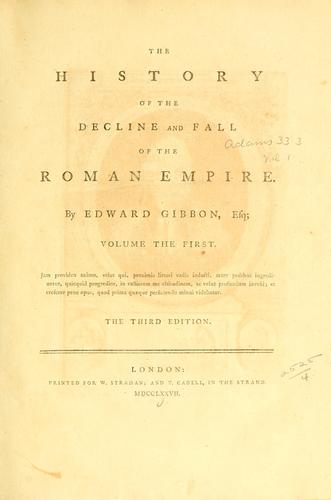
The History of the Decline and Fall of the Roman Empire
Edward Gibbon
Cited as saying there was never a better time for humanity than the era of the five good emperors.
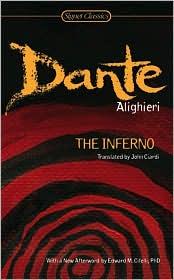
The Divine Comedy (Inferno / Paradiso)
Dante Alighieri
Discussed for placing Emperor Trajan in Paradiso, and later for damning Florentines and lovers Paolo and Francesca in Inferno.
📕
Florentine Histories (History of Florence)
Niccolò Machiavelli
Mentioned among Machiavelli's publicly circulated works, unlike the secretive Prince.
On the Nature of Things (De rerum natura)
Lucretius
Used as an analogy for a text that drifted in obscurity before suddenly becoming relevant centuries later.
Leviathan
Thomas Hobbes
Its publication is credited with reviving interest in Machiavelli as scholars sought to refute Hobbes.
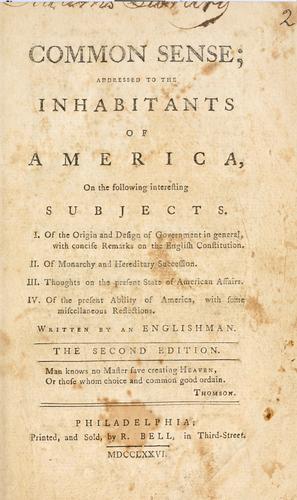
Common Sense
Thomas Paine
Cited to illustrate a utilitarian, separation-of-church-and-state view of religion's civic usefulness.
Oration on the Dignity of Man
Giovanni Pico della Mirandola
Named as one of the few Renaissance works later historians treated as genuinely original.
How to Win Friends and Influence People
Dale Carnegie
Used as a contrast: The Prince shouldn't be shelved next to it since it's about keeping power, not self-advancement.

Michael Nielsen – Why aliens will have a different tech stack than us

8 mentioned · watch the episode ↗
Subtle Is the Lord: The Science and the Life of Albert Einstein
Abraham Pais
Nielsen names it as the Einstein biography Dwarkesh recommended, source of the Michelson-Morley/ether history.
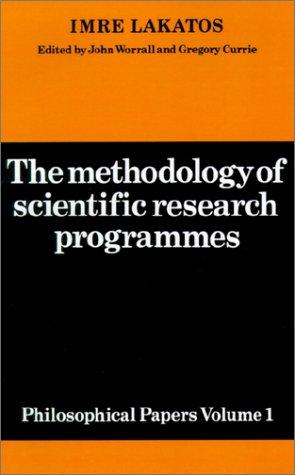
The Methodology of Scientific Research Programmes
Imre Lakatos
Cited alongside the Pais biography as another source for the Michelson-Morley story; referenced again later for the Prout/isotope example.
Principia Mathematica
Isaac Newton
Dwarkesh contrasts its 1687 publication and difficulty with Darwin's Origin of Species.
On the Origin of Species
Charles Darwin
Discussed at length as Darwin's book compiling evidence for natural selection, contrasted with Newton's Principia.
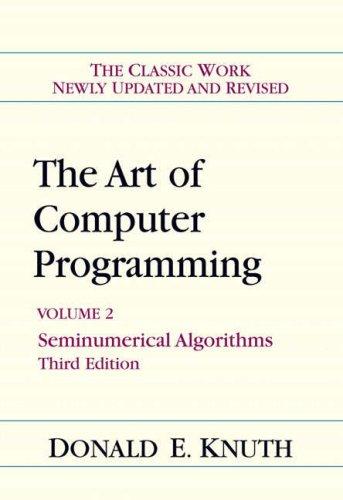
The Art of Computer Programming
Donald Knuth
Nielsen recounts Knuth's preface anecdote about computer science needing 'a thousand deep theorems.'
Quantum Computation and Quantum Information
Michael A. Nielsen and Isaac L. Chuang
Referred to by its nickname 'Mike and Ike' as the definitive textbook on quantum information that Nielsen co-wrote.
Special Relativity and Classical Field Theory (The Theoretical Minimum)
Leonard Susskind and Art Friedman
Dwarkesh says he went through three lectures of 'the Susskind special relativity book' to prepare for the interview.
Neural Networks and Deep Learning
Michael Nielsen
Dwarkesh's intro credits this unnamed deep learning book by Nielsen with drawing Chris Olah and Greg Brockman into the field.

Terence Tao – How the world’s top mathematician uses AI

4 mentioned · watch the episode ↗
📕
The Harmonics of the World
Johannes Kepler
Tao notes Kepler's third law appears as an aside in this book about planetary musical harmonies.
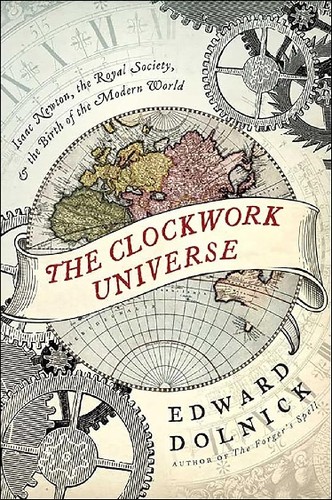
The Clockwork Universe
Edward Dolnick
Dwarkesh cites this book's account of the era between Newton's Principia and Darwin's Origin of Species.
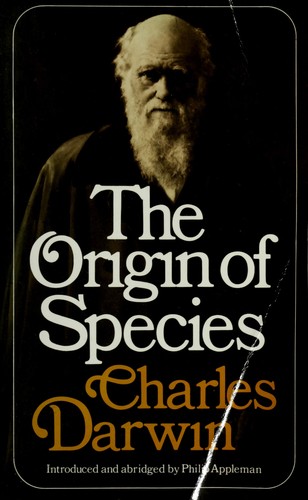
The Origin of Species
Charles Darwin
Discussed as Darwin's persuasively written, plain-English book proposing evolution by natural selection.
Principia Mathematica
Isaac Newton
Contrasted with Origin of Species as a much earlier, Latin-written, mathematically dense work.

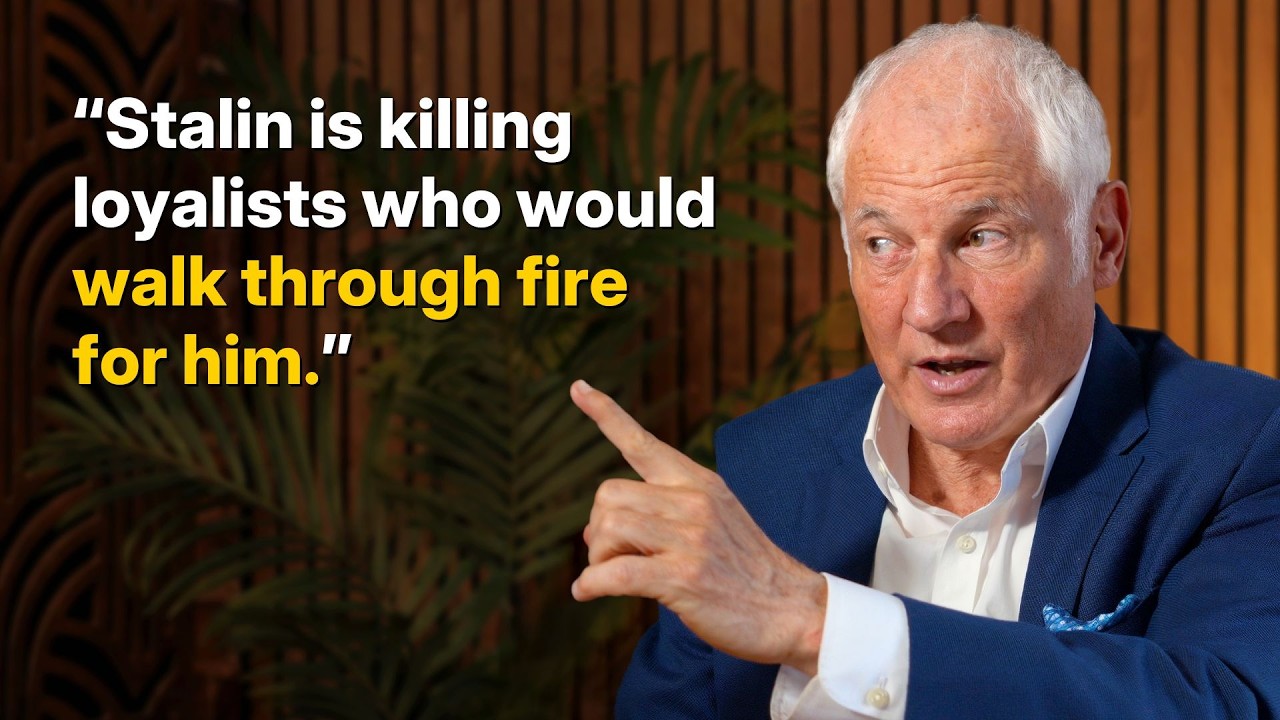
Stephen Kotkin — How Stalin became the most powerful dictator in history

4 mentioned · watch the episode ↗
Stalin: Paradoxes of Power
Stephen Kotkin
Named as the first volume of Kotkin's Stalin biography trilogy.
Stalin: Waiting for Hitler
Stephen Kotkin
Named as the second volume of Kotkin's Stalin biography trilogy.
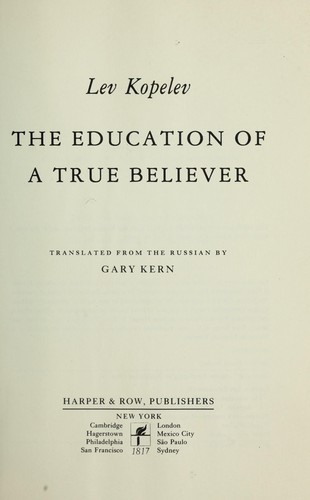
The Education of a True Believer
Lev Kopelev
Kotkin cites this memoir by Kopelev to explain the psychology of Soviet interrogators and collectivization enforcers.
Uncivil Society
Stephen Kotkin
Dwarkesh references it directly ('This is your thesis in Uncivil Society, right?') regarding pushback from within communist systems.

Sarah Paine - Why Putin and Xi can't escape geography
5 mentioned · watch the episode ↗
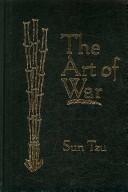
The Art of War
Sun Tzu (Sunzi)
Paine cites Sunzi's Art of War as making no reference to maritime warfare, reflecting the continental-empire worldview.
Mare Liberum (The Freedom of the Seas)
Hugo Grotius
Quoted for its argument that every nation is free to travel and trade by sea.
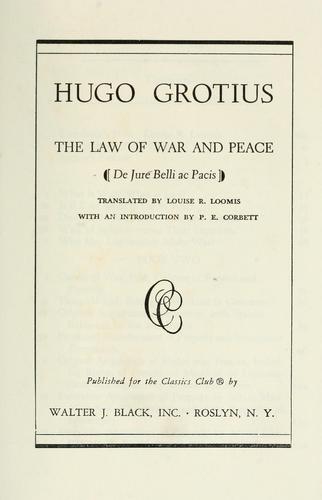
De Jure Belli ac Pacis (Law of War and Peace)
Hugo Grotius
Cited for Grotius's argument, via Roman and Byzantine law, that the sea belongs to all men.
Crime and Punishment
Fyodor Dostoevsky
Named as Dostoevsky's book while quoting his diary on Russia's civilizing mission in Asia.
📕
America's Strategy in World Politics
Nicholas Spykman
Referred to as Spykman's 'very important work' completed in 1943 and quoted extensively on sea power and rimland control; title inferred, not stated in transcript.

Sarah Paine – Why Russia Lost the Cold War

3 mentioned · watch the episode ↗
A Study of History
Arnold Toynbee
Paine cites Toynbee's multi-volume history of the West and his thesis that civilizations die from suicide, not murder.
The Old Regime and the Revolution
Alexis de Tocqueville
Paine references Tocqueville's book on the last days of the French monarchy to introduce his line about reform being the most dangerous moment for a bad government.
Democracy in America
Alexis de Tocqueville
Paine mentions Tocqueville also wrote this book, alongside the one on France.

Grant Sanderson (@3blue1brown) – AI disproved a famous math conjecture. Now what?

2 mentioned · watch the episode ↗
Nonlinear Dynamics and Chaos
Steven Strogatz
Dwarkesh describes working through Strogatz's textbook alongside his lecture and an LLM.
The Princeton Companion to Mathematics
Timothy Gowers (ed.)
Grant cites it as the math equivalent of the Stanford Encyclopedia of Philosophy — expositions crafted by one author rather than crowdsourced.

David Reich – Bronze Age shock, the Neanderthal puzzle, & the sudden spread of farming

2 mentioned · watch the episode ↗
The Origin of Consciousness in the Breakdown of the Bicameral Mind
Julian Jaynes
Dwarkesh cites Jaynes's theory that ancient people experienced gods as literal voices, relating it to schizophrenia-like traits under selection.
The Secret of Our Success
Joseph Henrich
Dwarkesh references 'your colleague Joseph Henrich's book' on how much hunter-gatherers needed to know to survive; title not stated but strongly implied by context.

General relativity from first principles – Adam Brown

1 mentioned · watch the episode ↗
Principia (Philosophiæ Naturalis Principia Mathematica)
Isaac Newton
Adam Brown cites Newton's laws as written down in the Principia in 1687.

How GPT, Claude, and Gemini are actually trained and served – Reiner Pope

1 mentioned · watch the episode ↗
📕
The Scaling Era: An Oral History of AI, 2019-2025
Dwarkesh Patel and Gavin Leech
Dwarkesh says he downloaded this scaling book (garbled as 'Reer Scaling book') and used Gemma to study it offline while prepping for the interview.

Latest episodes

Ajeya Cotra – "This might be the clearest warning shot we ever get"
scanned — nothing to shelf
The OpenAI/Hugging Face attack, clearly explained
scanned — nothing to shelf
Dylan Patel – Anthropic & OpenAI will have most of the world's compute by 2028
scanned — nothing to shelf
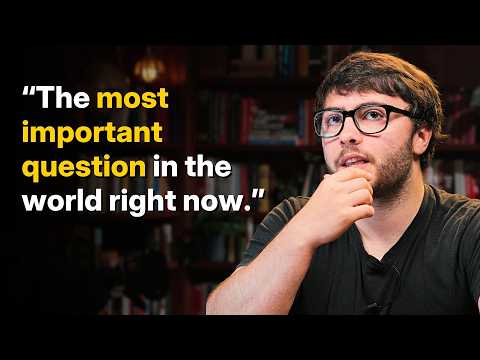
Ryan Greenblatt – What happens once AI can automate AI research?
scanned — nothing to shelf
8 Predictions for the Era of Continual Learning
scanned — nothing to shelf
This store built itself.
Claim yours — free →